The Roundup Ultra Plus registered in Spain under registration number ES-00725 is an SL formulation containing 36% glyphosate in the form of potassium salt. This concentration and type of salt directly condition the kinetics of leaf penetration and the toxicological profile of the co-formulants. Understanding the distinction between the European approval of the active substance and the national authorization of the commercial product remains a prerequisite for any discussion about its legality or dangers.
Approval of the active substance and product authorization: two distinct regulatory levels
The European regulation clearly separates two stages. The first concerns the approval of the active substance (here glyphosate), renewed at the community level. The second pertains to the authorization of each formulated product by the relevant member state.
Spain therefore issues a specific authorization for Roundup Ultra Plus, after reviewing the claimed uses, conditions of use, and risks specific to this formulation. A herbicide can contain glyphosate approved in Europe without being authorized in all member countries.
We regularly observe confusion between these two levels. European approval requires that at least one “representative use” be documented. This does not mean that application on a garden path, a ditch, or a non-agricultural area is covered by this assessment. A page detailing the risks of Roundup Ultra Plus in Spain reminds that the product is listed in the Spanish registry with the status “vigente,” but that its approved uses remain strictly professional and agricultural.
In France, the sale of glyphosate to individuals has been banned since 2019. This regulatory gap fuels a cross-border flow: French buyers procure the product in Spain, often unaware that importing a pesticide not authorized on national territory exposes them to criminal sanctions and seizures.
European exclusion criteria and glyphosate classification
European regulation sets strict exclusion criteria for substances with certain hazardous properties. High-category carcinogenicity usually triggers exclusion, except for narrow exceptions: serious threat to plant health and lack of reasonable alternatives.
The IARC (International Agency for Research on Cancer) has classified glyphosate as “probably carcinogenic to humans” (Group 2A). Several national and European regulatory agencies have reached different conclusions on this point, which explains the maintenance of community approval.
This divergence in evaluation between agencies should not be read as evidence of safety. It reflects distinct methodologies:
- The IARC assesses the intrinsic hazard of the molecule, regardless of the actual exposure level of populations.
- Regulatory agencies (EFSA, ECHA) assess risk by integrating prescribed usage conditions and expected exposure levels.
- Epidemiological studies on professional applicators remain the most informative, but their results vary according to cohorts and follow-up durations.
We recommend not reducing the debate to “carcinogenic or not,” but to consider that the level of risk directly depends on the application conditions and the formulation used.
Toxicity of the complete formulation: the role of co-formulants
Focusing solely on glyphosate masks a major technical issue. Commercial products like Roundup Ultra Plus contain co-formulants (surfactants, adjuvants) that alter the overall toxicity of the preparation. Some surfactants increase cellular toxicity well beyond that of pure glyphosate.
The nature of the potassium salt used in this formulation influences the speed of leaf penetration. A potassium salt penetrates differently than an isopropylamine salt, which modifies both herbicidal efficacy and the exposure profile of the applicator.
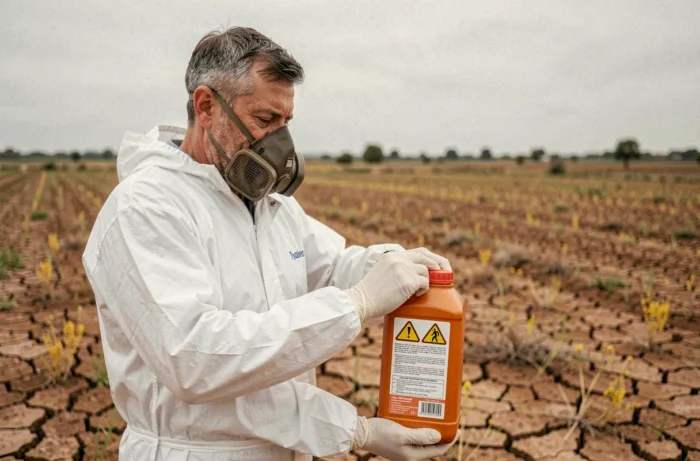
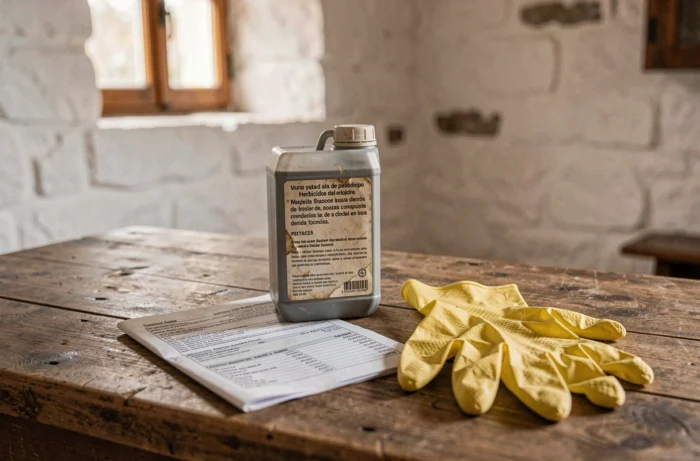
Safety data sheets mention standard precautions (wearing gloves, eye protection, prohibition of eating or smoking during application). In real conditions, adherence to these guidelines varies significantly, especially among non-professional users who obtain the product through cross-border channels.
Glyphosate and soil and water contamination
Glyphosate binds to clay particles in the soil, which slows its leaching. Its degradation produces AMPA (aminomethylphosphonic acid), a metabolite that is recurrently detected in surface waters and groundwater in Europe.
AMPA persists longer in the environment than glyphosate itself. Its presence in waterways is a reliable indicator of phytosanitary pressure on a watershed. Sandy soils or those low in organic matter promote migration to aquifers.
In Spain, climatic conditions (high evapotranspiration, intensive irrigation in certain regions) alter the degradation dynamics. A dry soil slows microbial activity responsible for glyphosate degradation, thereby prolonging its persistence.
Concrete precautions for professional users in Spain
The use of Roundup Ultra Plus in Spain remains reserved for professionals holding a phytosanitary product handler’s notebook. A few points of caution deserve to be highlighted:
- Check that the intended use is explicitly stated on the label of the authorized product (crops concerned, maximum doses, waiting periods before harvest).
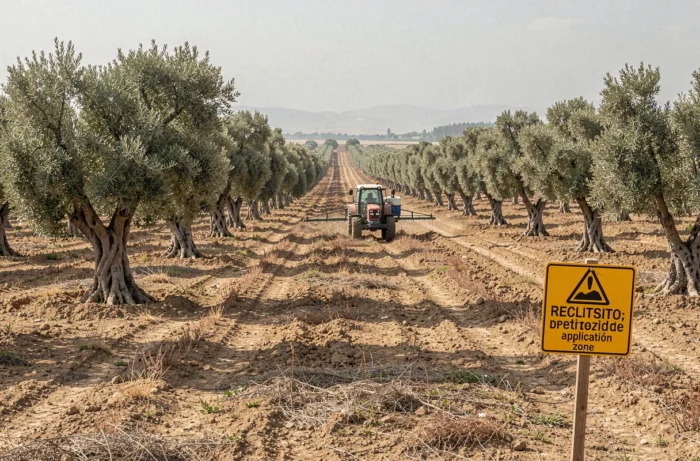
- Respect buffer zones relative to water points, the width of which varies according to local conditions and the spraying equipment used.
- Store the product in a ventilated phytosanitary storage room, away from foodstuffs and water sources, in accordance with Spanish regulations on storage facilities.
- Never transfer the product into a food container, a practice still observed among some occasional users.
Importing this product into France by an individual constitutes an offense, even if the purchase is legal in Spain. French customs have documented seizures of pesticides at the border, and penalties include fines and confiscation of the product. A French professional wishing to use glyphosate must turn to formulations authorized on national territory, the list of which evolves regularly.