
Organizing a dream wedding requires mastering trade-offs that generic checklists do not cover. Choosing a vendor, the format of the day, or managing weather contingencies are technical decisions that impact the budget, the comfort of guests, and the flow of the reception.
Heatwave plan and weather management for an outdoor reception
A rain backup plan is no longer sufficient. Specialized vendors now incorporate a weather plan that also covers heatwaves, with direct implications for the choice of venue and logistics.
On the operational side, we recommend anticipating several measures before signing with an outdoor venue:
- Structural shading (tensioned sails, ventilated tents) rather than unstable umbrellas, with anchoring suitable for the ground of the site.
- Water points, misters, and fans placed in waiting areas (cocktail, ceremony exit), complemented by hats provided.
- Menu adaptation: heat-sensitive desserts (creams, chocolate) replaced by cold alternatives, and serving white and rosé wines in chilled buckets from the cocktail onwards.
This climatic aspect also modifies the timeline. Site scouting should include a visit in summer conditions, not just off-season. We observe that couples who negotiate these points right at the signing of the rental contract avoid last-minute extra costs.
On mariage2reve.ch, these logistical questions are addressed in advance with venue sheets detailing available equipment and installation constraints.
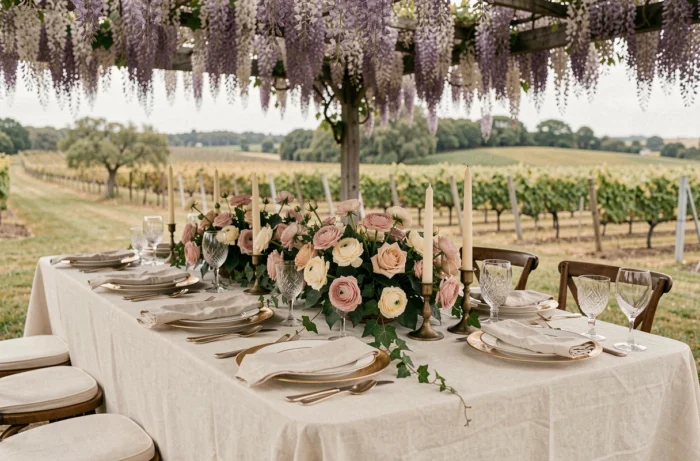
Secular ceremony outdoors: permits and regulatory constraints
Setting up an arch and chairs in a public park is not just a matter of good taste. An outdoor secular ceremony may require municipal permits, depending on the chosen location and the municipality involved.
Private land simplifies the process but does not exempt you from checking the capacity, accessibility for people with reduced mobility, and noise regulations. On public land (municipal garden, beach, state forest), a temporary occupation request must be submitted to the town hall or the ONF, sometimes several months in advance.
Sound system and music rights
Playing music during a ceremony or a reception open to the public triggers a declaration obligation with SACEM. Even a private wedding with a DJ or amplified playlist in a venue open to the public (castle, event domain) may be subject to inspection.
Check if the reception venue includes the SACEM fee in its contract. Some venues cover it, while others leave it to the couple. Forgetting this can result in a higher regularization fee.
Quiet wedding: reducing the guest list without sacrificing the experience
The so-called quiet wedding format is gaining visibility. The principle: a smaller ceremony, sometimes without exposure on social media, focused on the quality of the shared moment rather than the number of guests.
This choice has direct budgetary consequences. Reducing the guest list allows reallocating the budget per person towards higher quality services (gourmet menu, high-end photographer, exceptional venue). The overall cost decreases, but the unit cost per guest increases.
We observe that this format works particularly well when paired with a multi-day wedding. By concentrating the reception on a small group, it becomes possible to organize a complete weekend with on-site accommodation, next-day brunch, and shared activities, without blowing the budget.
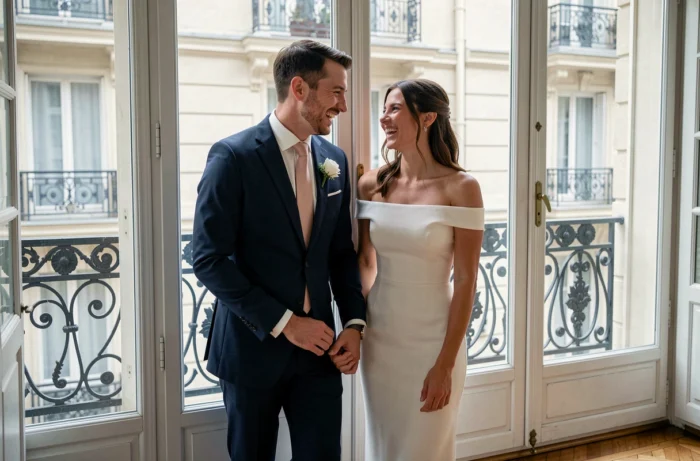
Multi-day wedding: logistics and budget items to negotiate
The multi-day wedding appeals to the high-end market, but on-site accommodation determines the feasibility of the format. Before choosing a venue, it is essential to check the number of available rooms, the conditions of availability (single night or full stay), and additional costs (cleaning, breakfasts).
The items that mechanically increase with this format:
- Additional catering (dinner the night before, next-day brunch), often underestimated during the initial estimate.
- Extended venue rental, with a sometimes decreasing rate for the second night, sometimes not.
- Vendors engaged for a longer duration (photographer, DJ, coordinator), which impacts their daily rate.
The gain lies elsewhere: eliminating transfers between locations (ceremony, cocktail, reception, accommodation) simplifies planning and reduces logistical stress on the big day. For guests, the experience becomes smoother.
Coordination and the role of the wedding planner
In a multi-day format, coordination can no longer rest on a family member. The volume of micro-decisions (meal times, room rotations, managing staggered arrivals) justifies a professional coordinator, even if the couple manages the rest of the organization independently.
A wedding planner who only intervenes on the day charges less than a full-service package, and their contribution is mainly measured in managing unforeseen events and adhering to the schedule.
The format of weddings has changed. Couples who invest time in technical trade-offs (weather, regulations, reception format) before choosing their color palette achieve a smoother day and a better-controlled budget. Logistics precedes decoration, not the other way around.