Lacoste has occupied the casual chic segment for over nine decades, but the premium polo and stylish sportswear market is attracting competitors with very different profiles. Between historic American houses, sports labels transitioning into lifestyle, and generalist brands moving upscale, the landscape has significantly changed in recent years.
This ranking is based on three axes: the proximity of positioning to Lacoste, the ability to attract a similar clientele, and the recent dynamics of each brand in the French market.
1. Ralph Lauren: the historic rival in premium polo
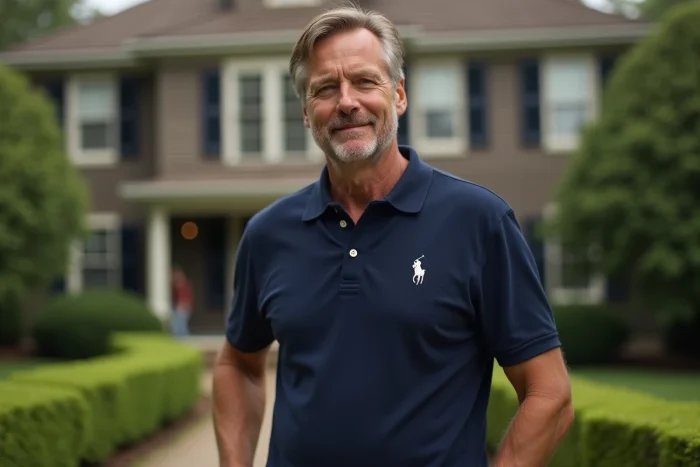
Ralph Lauren remains Lacoste’s most direct competitor. Founded in 1967, the American brand shares with the crocodile an DNA centered around polo, sport, and a reimagined classic wardrobe. The two labels directly overlap in stores on the same racks: pique polos, oxford shirts, cotton sweaters.
The difference lies in the storytelling. Ralph Lauren builds a preppy universe inspired by the American East Coast, while Lacoste claims a French tennis heritage. In terms of pricing, both brands are positioned within a comparable range for their main lines. To better understand Lacoste’s competitors to discover, Ralph Lauren serves as the logical starting point: same segment, same target, same ambition for a global lifestyle.
Ralph Lauren deploys a range of sub-brands (Polo, Purple Label, Lauren) that allows it to cover a much wider price spectrum, from accessible premium to high-end luxury. Lacoste, after its visual identity overhaul launched in April 2026 (new serif typography, retouched crocodile with a red tongue, and return to original green), seems to tighten its territory around a heritage and tennis positioning.
2. Tommy Hilfiger: the American casual brand hunting in the same fields
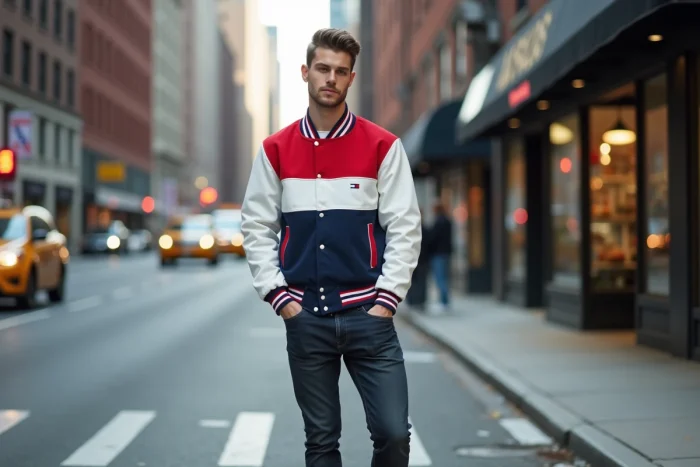
Tommy Hilfiger positions itself in a niche very close to Lacoste: premium sportswear with a strong visual identity. The red, white, and blue tricolor flag serves as an identity marker as recognizable as the crocodile. Both brands can be found in the same department stores, the same shopping malls, and often in the same shopping cart of consumers.
Tommy Hilfiger has bet on collaborations with designers and celebrities to refresh its image. The brand shows stable growth in the premium segment, particularly among a younger clientele than Lacoste’s. Its strong point: a complete wardrobe, from jackets to denim, that allows for a full look without stepping outside the brand’s universe.
The limitation of Tommy Hilfiger compared to Lacoste lies in the perception of quality. In the French market, Lacoste maintains an image advantage linked to its French roots and its reputation for careful craftsmanship on iconic pieces.
3. Calvin Klein: the rising bridge competitor
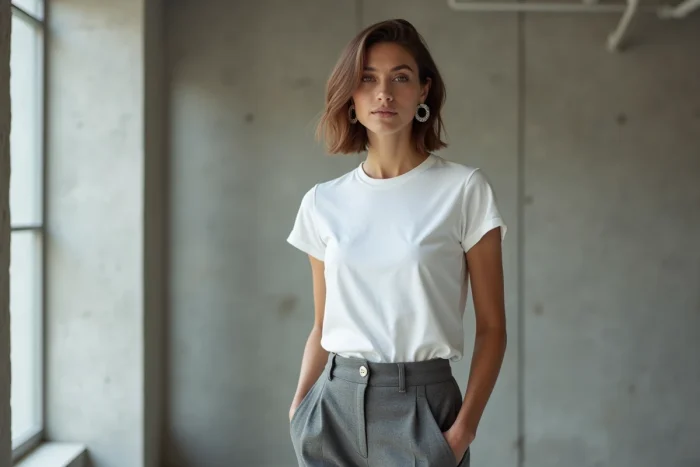
Calvin Klein is not the first name that comes to mind when thinking of Lacoste’s rivals. The brand is now cited at the same level as Lacoste and Tommy Hilfiger as a direct competitor in the premium polo and sportswear segment. This repositioning has accelerated since 2023-2024.
Calvin Klein relies on a clean minimalism that contrasts with Lacoste’s more colorful universe. Its polos, t-shirts, and cotton basics occupy the same shelves at comparable prices. The brand benefits from global recognition driven by its advertising campaigns and its historical activity in underwear and fragrance.
- Price positioning nearly identical to Lacoste on premium polos and t-shirts
- Minimalist image that attracts an urban clientele, while Lacoste plays the sport-chic card
- Strong presence on social media and influencer campaigns, with high engagement on Instagram
4. Hugo Boss: the high-end brand moving towards casual
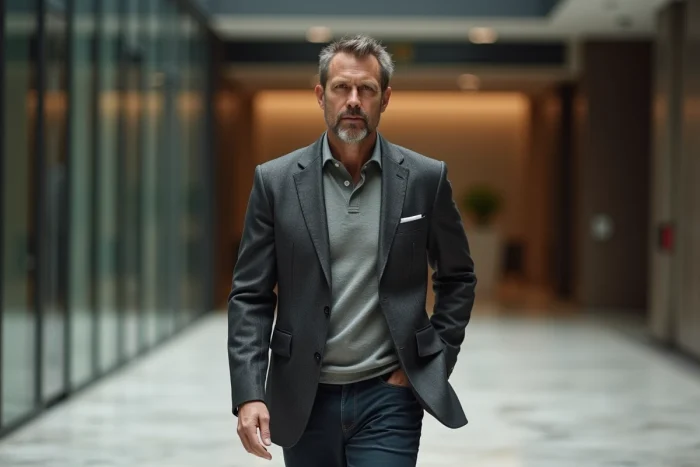
Hugo Boss has made a strategic shift in recent years by splitting its offer between Boss (accessible premium) and Hugo (younger, more streetwear). This reorganization places the German brand in direct competition with Lacoste in the polo, basics, and casual men’s clothing segment.
Boss shows stable growth in the premium casual, a territory where Lacoste has historically been strong. Both brands share a male clientele looking for versatile pieces that work for both office and weekend. Hugo Boss distinguishes itself with a more structured cut and a grounding in formal wear, even in its casual pieces.
The point of friction: Hugo Boss is still perceived as more expensive than Lacoste for comparable pieces. This perception limits its ability to attract Lacoste buyers sensitive to value for money, but it gives it an advantage in terms of perceived prestige.
5. Uniqlo: the premium basic that disrupts the codes
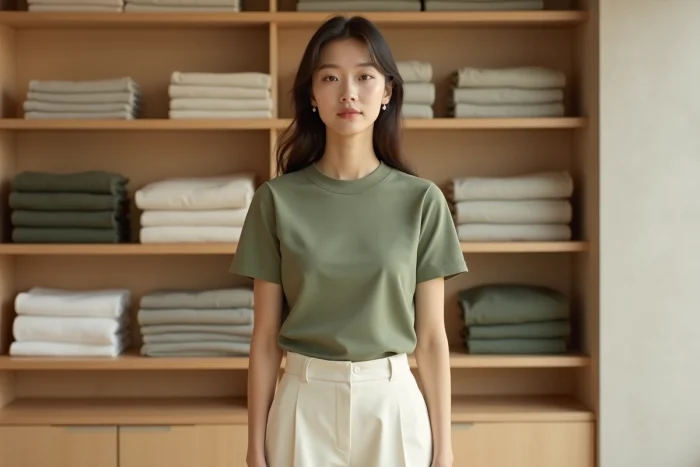
Uniqlo represents a type of competition that Lacoste did not face ten years ago. The Japanese brand is now identified as a direct competitor of Lacoste in the premium basics in recent analyses of the French market. This competitive shift towards a more mass-market player but with a strong quality image deserves attention.
Uniqlo does not rely on brand prestige or an ostentatious logo. Its proposition is based on the quality of materials, consistency of cuts, and significantly lower prices than Lacoste for functionally similar pieces. A Uniqlo polo and a Lacoste polo serve the same clothing role, but one costs a fraction of the price of the other.
- One of the most competitive quality-price ratios in the market for basics
- Regular collaborations with designers that enhance the brand’s image
- Expanding store network in France, with a growing physical presence in major cities
This positioning forces Lacoste to justify its price gap through heritage, design, and brand identity. With its new visual identity launched in 2026, incorporating René Lacoste’s handwritten signature, the crocodile brand precisely chooses this ground to differentiate itself from a competitor that cannot claim the same historical depth.