Sudoku doesn’t stop at 80 years old. Puzzles, brushes, or memory games have no expiration date. On the contrary: some artistic or creative activities continue to stimulate the mind, memory, and the joy of learning, even when hair turns gray. There’s nothing stopping one from exploring new creative territories or perfecting talents, regardless of the number of springs counted.
Recent studies reveal that immersing oneself in creative hobbies slows the loss of mental faculties more effectively than simple intellectual exercises. The benefits are felt both in morale and mental sharpness, provided that activities are chosen according to individual desires and possibilities.
Why creative activities are valuable for the development of seniors
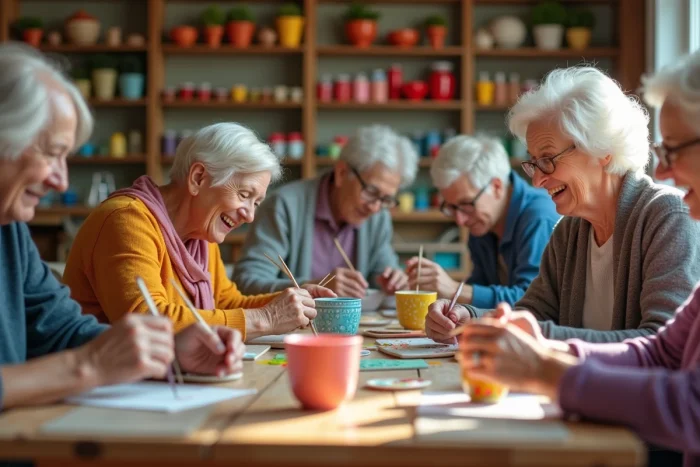
Regularly engaging in creative activities injects new energy into the daily lives of seniors. Drawing, painting, molding clay, trying out collage or creating objects: each action refines fine motor skills, engages coordination, and awakens personal pride. Whether in a group workshop or during more intimate moments, these experiences provide a space where everyone can express themselves freely. Mental health and cognitive stimulation are strengthened, far beyond a mere decorative pastime.
Older adults who invest in hands-on activities see their memory remain sharp and their attention span sharpen. Touching, shaping, and manipulating materials brings back memories, gives meaning, and nurtures self-confidence. Even modest creations have an impact: they help maintain autonomy and foster the desire to try, learn, and surprise oneself, no matter how many years have passed.
The social dimension plays a central role. Sharing an activity, exchanging tips or anecdotes, weaves a vibrant web of relationships. Group workshops break isolation, promote the transmission of know-how, and value every skill, even the discreet ones. This social bond proves invaluable, especially for those whose circle shrinks over time.
To go further and discover other concrete ideas for implementing activities for seniors, the site https://seniorstudio.org/ is full of resources and ideas to adapt at home or in support. The creative process is not limited to producing an object: it becomes a concrete lever for physical and mental health, a source of renewed pleasure, and a key to preserving autonomy over the years.
What hands-on activities to choose to stimulate the mind daily?
The choice of hands-on activities suitable for seniors is vast, each with a different goal: cognitive stimulation, exercise of motor skills, and creation of connections. Plastic arts are among the most accessible. Drawing, painting (watercolor, acrylic), pottery, scrapbooking, or jewelry making allow for self-expression, mobilize dexterity, and rediscover the pleasure of a mastered gesture.
- Board games and memory games: they engage thinking, exercise attention, and create a friendly atmosphere. Crosswords, sudoku, chess, all provide opportunities to mobilize memories, learn, and share moments of complicity.
- Gardening and cooking: planting, watering, harvesting, preparing together. These hands-on activities combine patience, observation, creativity, contact with nature, and the pleasure of flavors. They provide concrete well-being and work on coordination.
Here are some activities that stimulate the mind while promoting social connection and personal growth:
Art therapy workshops are ideal for expressing emotions, reducing stress, and maintaining precision in movement. Music, whether listening to or playing an instrument, also offers multiple benefits: it stimulates memory, attention, and promotes relaxation. Reading aloud or writing are other effective means to cultivate imagination and preserve mental sharpness. Finally, intergenerational workshops provide a privileged space to share knowledge and strengthen the social fabric around seniors.
Practical tips for integrating creativity into everyday life
Creativity can be found in the simple gestures of daily life. For older adults, each day holds small opportunities to stimulate the mind and hands. The choice of hands-on activities should be adjusted to individual desires, abilities, and rhythms. Rather than imposing, it’s better to suggest: a sketchbook placed within reach, a few pastels, or some modeling clay available encourages action without constraint or pressure.
Support from family caregivers or professionals creates a conducive environment for personal expression. Multiply the proposals: writing or painting workshops, memory games, reading sessions aloud, gardening, or cooking in small groups. Variety sparks curiosity and maintains motivation.
- Set up a dedicated space for creation: a bright table, accessible materials, and displayed creations encourage repetition, day after day.
- Establish regular appointments, solo or in groups. These anticipated moments structure the week and preserve the pleasure of surprising oneself.
- Value exchange: creating together, in a group workshop or at home, strengthens social bonds and nurtures self-esteem.
Here are some concrete ideas for easily integrating creativity into daily life:
Workshops offered by specialized organizations provide easy access to a range of activities, supervised by trained facilitators. These resources allow for the introduction of new practices, broaden the range of leisure activities, and support autonomy in a reassuring environment.
Creativity, far from dulling with age, can continue to nourish the mind, bring life to days, and open unexpected doors. Even at an advanced age, curiosity remains the best engine for shaping, inventing, and transmitting. And what if the future belonged to those who have never stopped learning?