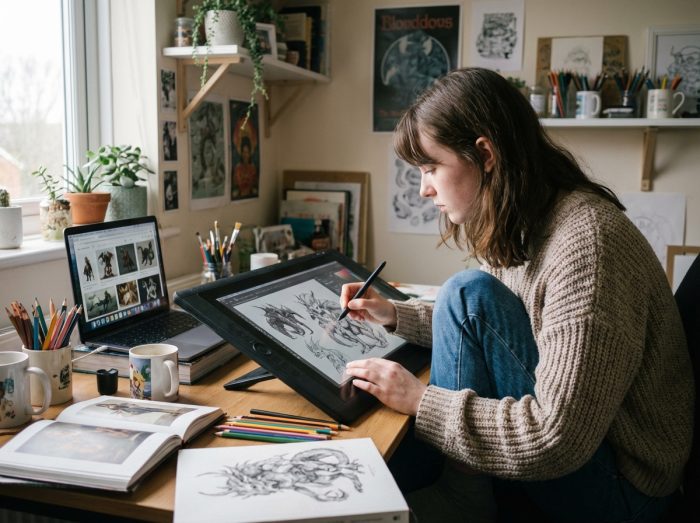
A diploma does not magically open doors, but certain programs act as springboards from the very first year. Public schools of applied arts, despite rigorous selection, often remain more accessible than private schools, whose tuition fees sometimes soar beyond 10,000 euros per year.
The sector relies as much on the portfolio as on the diploma. However, the criteria for entrance exams are far from transparent: creativity, technique, ability to work in a team, the selection remains unpredictable. Hybrid courses, which combine artistic training and digital skills, are gradually establishing themselves against purely academic paths.
Why drawing can become a real profession today
Drawing has risen to the status of a recognized professional activity, driven by the explosion of opportunities and the digital revolution. Concept artist, illustrator, graphic designer: these professions are no longer fictional. They permeate sectors such as video games, animation, advertising, publishing, or comics. In animation studios, communication agencies, or publishing houses, the demand for artistic and digital profiles continues to grow, from Paris to Barcelona, from Lyon to Berlin.
The separation between traditional and digital creation has practically disappeared. The concept artist intervenes very early on, imagining visual universes for video games, 2D/3D animation, special effects, and even international cinema. The illustrator, on the other hand, takes on multiple assignments in publishing, press, web, or advertising. Studio, agency, or freelancer, in France or elsewhere, these professionals juggle versatility and specialization according to their ambitions.
Digital tools are revolutionizing work methods. Generative AI is entering the creative processes, without ever erasing the artist’s imprint. Knowing how to use drawing software, refine one’s style, collaborate with technical teams, promote one’s work on a portfolio or social media: this is the daily life of the profession today.
To navigate this rapidly changing field, the studies to follow to become an illustrator or concept artist provide solid reference points. Artistic training is accompanied by a watch on trends, a constant adaptation to new media, and continuous learning. At the center of these trajectories, the passion for drawing goes hand in hand with rigor, curiosity, and innovation.
What studies and training to choose to succeed in illustration and concept art
For those aiming for a position as a concept artist or illustrator, pursuing a higher artistic education remains the safest choice. Art schools, public or private, offer programs ranging from the National Diploma of Art (DNA) bac+3 to the DNSEP bac+5, not to mention bachelor’s and specialized master’s degrees in 3D animation, illustration, or graphic design. In Paris, Lyon, and Marseille, the training combines traditional drawing, digital creation, and visual culture.
Here are the main options to structure your path:
- National Schools of Art: admission through competitive exams, demanding programs, creativity at the heart of pedagogy.
- Bachelor’s and master’s degrees in animation or illustration: technical approach, adaptation to studio expectations, numerous collaborative workshops.
- Bachelor’s and master’s degrees from universities: plastic arts, design, programs oriented towards visual creation and artistic research.
Mastering graphic software (Photoshop, Procreate, Blender) is acquired through numerous projects. Schools encourage the creation of a professional portfolio from the first year, a valuable key for initial contracts, in studios, agencies, or as a freelancer. International exchanges are developing, offering exposure to other artistic practices across Europe.
The journey does not stop at the diploma: workshops, residencies, internships, and validation of prior learning punctuate the creator’s evolution. These studies promote versatility and shape each artist’s uniqueness, in a sector where specialization often remains decisive.
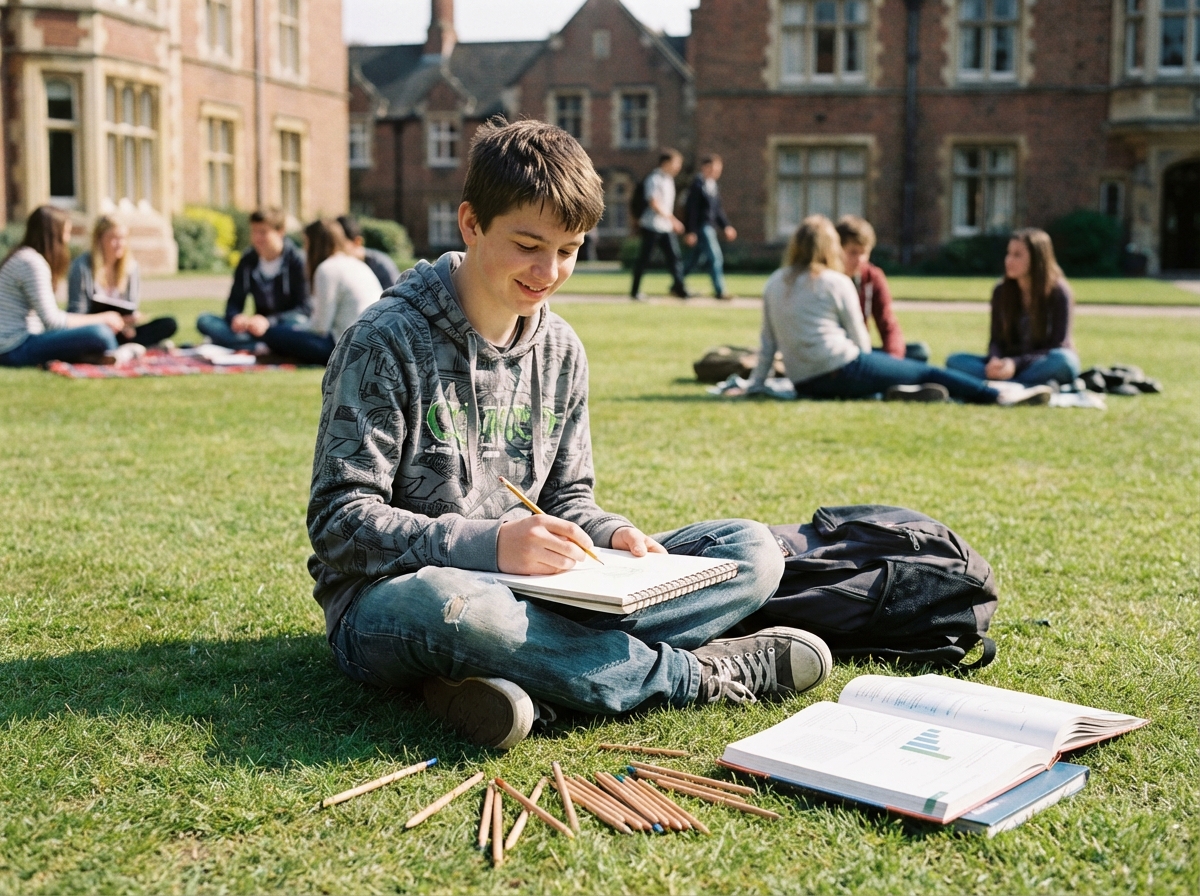
Inspiring paths and practical advice for starting an artistic career
Some artists perfectly illustrate the diversity of possible paths, navigating between freelance and studio work. Simon Goinard, Esben Lash Rasmussen, Shelly Wan… These names often come up for their ability to seamlessly transition from traditional drawing to digital, from film making-of to the publication of personal art books. Their strength: a solid portfolio, fueled by practice, curiosity, and the art of storytelling visually.
Building your portfolio starts during training: select varied projects, assert a graphic identity, but also show your adaptability. Studios and publishing houses seek artists capable of taking ownership of a brief without losing their uniqueness. Master Photoshop, Procreate, Blender, keep an eye on trends (from visual storytelling to generative AI and new formats). Professional English becomes invaluable: international collaboration is intensifying.
Visibility is not limited to social media: a personal website offers a more comprehensive presentation space. LinkedIn, Instagram, Twitter, Facebook serve as springboards, but the quality of a well-constructed portfolio, presented during an internship or an artistic residency, often makes the difference. Studios appreciate profiles capable of communicating with technicians, production managers, or screenwriters. Develop your soft skills: rigor, openness to criticism, and a taste for collaboration. It is on these foundations that the first collaborations open up, followed by positions of responsibility such as lead concept artist or art director.
Ultimately, drawing is no longer just a passion; it is a passport to invent, collaborate, and leave one’s mark on universes that will shape the collective imagination.