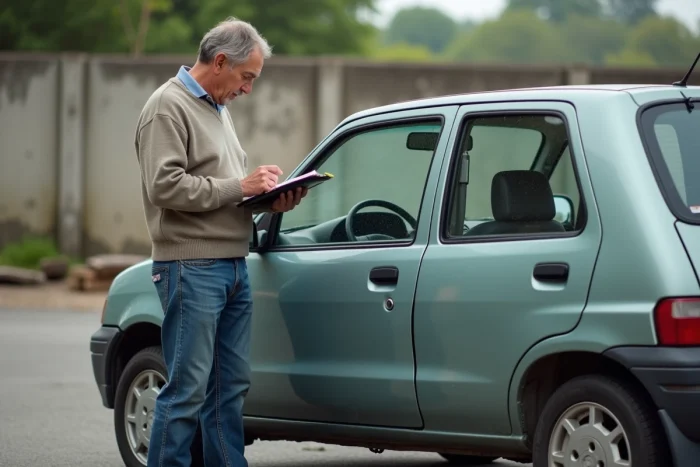
The axe often falls without warning: a simple expert report, and your car shifts from the status of a functioning asset to that of a cumbersome object, banned from the road. No owner truly anticipates this scenario, yet every year, thousands of motorists see their vehicle deemed “economically irreparable,” leading to strict and sometimes harsh procedures.
There are remedies available to contest the opinion, obtain fairer compensation, or explore other options, but many procedures remain poorly understood. Legislation outlines several legal paths to avoid an irreversible outcome, provided one is responsive to deadlines and paperwork.
Economically irreparable car: dissecting the verdict and its impact
When an expert, appointed by your insurer, assesses every nook and cranny of the car, the evaluation is decisive. Everything is checked: from the engine to the structure, including the interior. If the cost of repairs exceeds the vehicle’s value before the incident, the axe falls. The famous article R. 327-1 of the Highway Code then comes into play, without nuance.
From the report, each restriction cascades: registration frozen, gray card blocked, formal prohibition to drive unless compliance is restored as certified by a technical inspection. No matter the cause of the damage: accident, natural disaster, fire… the penalty remains the same for any vehicle deemed economically irreparable.
At this stage, resale becomes a complete dead end. The end-of-life vehicle (VHU) sector takes over: depollution, dismantling, destruction. However, giving up is not an option. Pursuing remedies, requesting a counter-expertise, negotiating the value, or turning to other solutions to limit the damage: there is still room to defend your interests and, sometimes, avoid the complete disappearance of the vehicle. The key is to inform yourself quickly and execute each of the formalities without missteps.
What choices after the expert’s decision?
As soon as the notification is received, options begin to emerge. Accepting your insurer’s compensation offer is the most direct route. You receive the amount based on the expert’s replacement value (VRAD) and then hand over the gray card: the vehicle then goes to a VHU center, destined for regulatory destruction.
But nothing obliges you to accept unconditionally. Request a counter-expertise: seek an independent expert, identify each line of the report that deserves discussion. With a fresh perspective, it is possible to reduce some costs, discuss the value, or reveal an error in the initial estimate. If an agreement falters, mediation or recourse to the court remains open.
And what if your attachment to the vehicle prevails? Keeping the car is still possible but heavily regulated. As long as the technical inspection is not validated, any sale or new registration is locked. And as soon as the decision to scrap is made, remember to cancel your car insurance policy: continuing to pay for a wreck makes no sense.
Each step comes with paperwork and deadlines to respect. For drivers reliant on their vehicle daily, these administrative steps add a significant layer of difficulty.

Limiting the damage: concrete advice to protect your interests
The declaration of an economically irreparable vehicle does not necessarily lead to inevitable scrapping. Depending on the situation, several levers exist to reduce financial loss and ecological impact.
First step: scrutinize the expert report. Review the cost estimates, consider the possibility of opting for controlled used parts. Some independent repairers offer them: in several cases, this choice brings the cost below the critical threshold and allows for a legal return to circulation, a solution still underutilized.
Inspect your car insurance policy. Some clauses offer a reduced deductible or specific guarantees depending on the situation. Emphasize the vehicle’s prior condition, a rare model, or a real value higher than the assessed value: this can sway the compensation.
Don’t let the car sit idle for too long: the longer it remains stationary, the more it deteriorates. Before any transfer to the VHU center, take the time to remove your belongings, as well as any functional equipment: some parts can find buyers on the market piece by piece.
Here are the approaches to consider concretely to avoid a total loss:
- Obtain several quotes from different garages, including those outside the manufacturer’s network, to gauge the true feasibility of an affordable repair.
- If the model in question attracts collectors or enthusiasts, inquire about the possibility of selling the vehicle as-is, provided you strictly adhere to the legislation.
Finally, administrative rigor makes the difference. Respecting each step, even in haste or under emotional strain, remains the best way to avoid exacerbating the damage and to preserve the security of the used vehicle market.
From the status of a running car to that of a wreck in a single decision: the shock is severe, but nothing is set in stone. For those who anticipate, surround themselves, and refuse to give up too soon, the adventure can still turn for the better. Managing these challenges with clarity is about transforming the penalty into an opportunity.