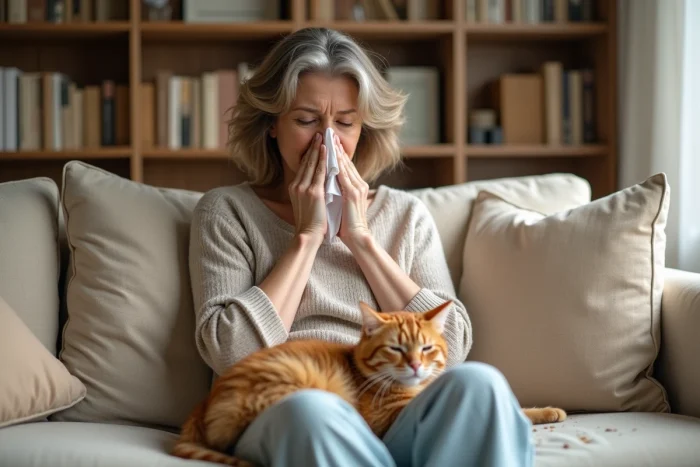
Cat fur does not enter the lungs like asbestos fibers. The diameter of a cat hair is too large to reach the pulmonary alveoli, unlike fine particles or microscopic fibers. The respiratory risk associated with cats does not come from the fur itself, but from what it carries: an allergenic protein called Fel d 1, produced by the animal’s saliva and sebaceous glands.
Fel d 1: the protein that triggers respiratory reactions
The term “cat hair allergy” is misleading. The real cause is a glycoprotein, Fel d 1, that the cat deposits on its fur while grooming. When the hair falls out, the protein ends up on fabrics, furniture, clothing, and becomes suspended in the ambient air as microparticles.
These particles, much smaller than visible hair, can indeed be inhaled and reach the deep airways. It is this microscopic fraction, and not the whole hair, that causes rhinitis, conjunctivitis, and asthma attacks in sensitized individuals.
A detail often overlooked: it is not necessary to touch a cat to trigger a reaction. Simply sitting on a couch where the animal has lain is enough, as Fel d 1 persists for a long time in the home environment. To delve deeper into this topic, a detailed file discusses cat hair in the lungs on British & Co with additional insights.

Cat allergy and asthma: the respiratory link to monitor
About one in ten human respiratory allergies is thought to be related to cats, according to current veterinary data. The most common manifestation remains allergic rhinitis: sneezing fits, stuffy nose, irritated throat. Conjunctivitis, with watery or itchy eyes, often accompanies these symptoms.
The next stage, which is more concerning, is allergic asthma. In a person who is already asthmatic, repeated exposure to Fel d 1 can lead to chronic bronchial inflammation. Persistent dry cough, wheezing, or shortness of breath at rest in a home where a cat lives are signals to take seriously.
In the most severe cases, the reaction can escalate to angioedema, with swelling of the tissues in the face and airways. This type of reaction remains rare but warrants an emergency consultation.
Confusion between allergy and mechanical accumulation
No published medical data documents a physical accumulation of cat hair in human lungs, comparable to what occurs with asbestos or silica in occupational settings. Cat hair does not cause pneumoconiosis. Asbestos fibers measure a few microns in diameter and embed themselves in lung tissue. A cat hair, even a fine one, remains dozens of times too thick for this mechanism.
The fear of having “hair in the lungs” is based on a confusion between two distinct phenomena: the immune reaction to an allergen carried by the hair, and the physical inhalation of pathogenic fibers. Distinguishing between these two risks allows for an appropriate response: allergological treatment in one case, hygiene measures in the other.
Reducing exposure to feline allergens in the home
For allergic individuals living with a cat, a few targeted measures significantly reduce the concentration of Fel d 1 in indoor air:
- Vacuum textile surfaces (sofas, carpets, curtains) at least twice a week with a device equipped with a HEPA filter, which retains allergenic microparticles instead of recirculating them
- Prohibit the cat from entering the bedroom, where the duration of nighttime exposure amplifies symptoms
- Brush the cat regularly in a ventilated room to limit the dispersion of fur laden with Fel d 1 throughout the rest of the home
- Wash hands after each contact with the animal, as the protein easily transfers to mucous membranes through face rubbing
These actions do not eliminate the allergen, but they measurably reduce the ambient allergenic load.
Cat breeds and Fel d 1 production
No cat breed is completely hypoallergenic. Some breeds, like the Siberian or Balinese, are known to produce less Fel d 1, but the variability among individuals of the same breed remains significant. An individual compatibility test, with prolonged contact with the specific animal, is more reliable than a choice based solely on breed.

Diagnosis and management of cat allergy
In cases of recurrent respiratory symptoms in the presence of a cat, an allergist can confirm sensitization through a skin test (prick test) or a blood test for specific IgE to Fel d 1. A precise diagnosis allows for ruling out other causes of rhinitis or asthma, such as dust mites or mold, which often coexist in the same environment.
Treatments range from antihistamines for mild forms to inhaled corticosteroids for asthma, along with desensitization (specific immunotherapy) over several years. This last option aims to gradually reduce the immune system’s reactivity to the feline allergen.
The decision to part with the cat only makes medical sense in severe forms resistant to treatment. Even after the animal leaves, Fel d 1 can persist for several months in a home, necessitating thorough cleaning of all textile surfaces to see a real improvement in symptoms.